.png)
HOW TO CREATE A THREE-DIMENSIONAL CHARACTER?
- Tiah Roberts-Cooper
- Dec 7, 2023
- 14 min read
Updated: Dec 8, 2023
Being a professional and successful author requires you to master your craft, solely by examining the way in which other renowned authors implement powerful techniques. These techniques allows their characters to be brought to life, whilst strengthening their plots.
Ultimately, if you are pursuing to be a writer, then it is essential that you master the steps of creating thriving three-dimensional characters.
But why is it so important?
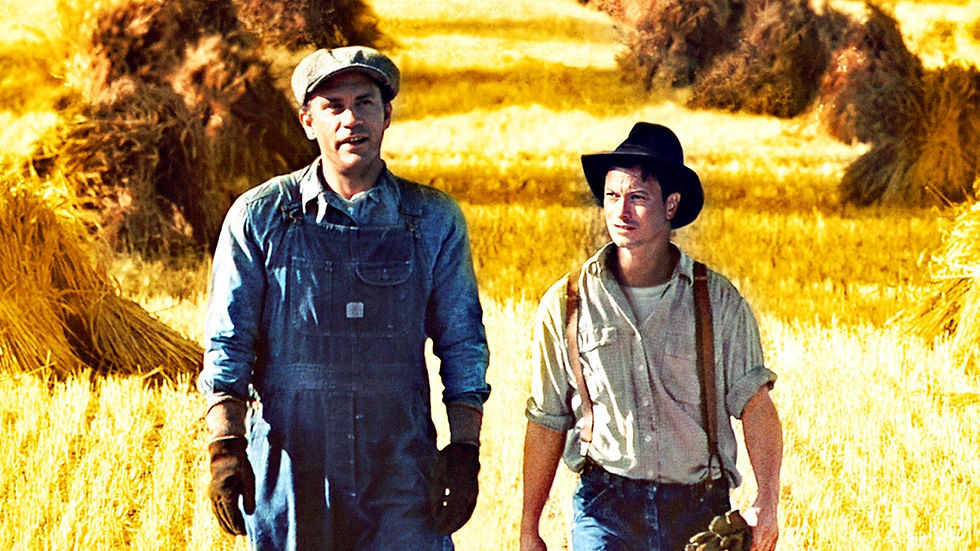
Well that’s simple! It benefits us readers. By developing a realistic fictional world, the readers can connect with the action and characters as they progress throughout the story. For instance, George and Lennie from Of Mice and Men by John Steinbeck. These two protagonists contrast with one another in a natural and rewarding way, ergo echoing their strong relationship.
Of Mice and Men was set during the Great Depression, and reveals the way in which people lived during times of immense poverty. Most importantly, this heart-warming novel uncovers the hopes, dreams, and desires of society as a whole.
George and Lennie are foil characters who embark on a journey to achieve their American Dream. Lennie is docile, dim-witted, and mentally disabled; whilst George is smart, short-tempered and sensible. Against their backdrop of poverty, they stick together in order to achieve their dream of owning their own farm.
Nevertheless, as the novel progresses we begin to see Lennie becoming a hindrance to George’s dream. Steinbeck manipulates realistic historical events into his fictional world which creates a human reaction. In return, readers always champion for Lennie and George to achieve their American Dream.
But how do other renowned authors create such rounded characters?
1. SETTING
Setting is the time, place, and environment in which narrative takes place. Typically, setting can be a real life place or it can be a fictional, imagined world. So, you can either choose to set your story in the Victorian era. Or, create the unexpected like Wonka’s chocolate factory.
Within literature there are four different types of setting: time, geographic location, physical location, physical environment, social and cultural environment. All of these factors play a great role in providing inspiration for your own setting.
Let me briefly explain each type of setting.
TIME
‘When does this story take place?’
This is what you should be deliberating in your mind, if you choose to involve time within your setting. Generally, time can be a historical period, a season, time of day, or even a time of year. Time is an important element within setting, since it can provide context background to the social climate which your main character is in.
EXAMPLE: The Iliad by Homer (historical period: Trojan War)
The Iliad is a Greek Epic poem set between 725 and 675 BCE. This exciting Epic unfolds and exposes the events of the Trojan war. Immerse yourself in the legend of Gods, Kings, pride and war.
GEOGRAPHIC LOCATION
‘Do I know this location already, or is it made up?’
Ponder on this whilst you decide where geographically you would like to set your story. Geographic location refers to where your story is set. This can either be a city, state, country, or an imaginary world.
Cool, right?
Geographic location is a valuable tool for the development of your setting and main protagonist. This is because, you can unmask the trials and tribulations that your main character faces within your novel. Ergo, as a reader you will become more inclined to generate an emotional attachment to the characters because of the significance of their environment.
EXAMPLE 1: Charlie and the Chocolate Factory by Roald Dahl (geographic location: Wonka’s Chocolate Factory)
Charlie and the Chocolate Factory is a children’s book, where a little boy from a destitute, poor family gets the opportunity to win an entire chocolate factory. The story is set in an imagined world made of chocolate and an endless supply of sweets and goodies. It’s every child’s dream!
EXAMPLE 2: Les Misérables by Victor Hugo (geographical location: Paris)
Les Misérables tells the story of inequality in France. The main protagonist Jean Valjean is an ex-convict who is arrested after helping a young girl that is dying.
In comparison to Charlie and the Chocolate Factory, Victor Hugo sets his story in a well-known city instead of creating a fictional world like Roald Dahl. Consequently, these two novels illustrate the ways in which geographical location can be implemented in order to give your characters more depth and showcase their innate qualities.
PHYSICAL LOCATION
‘What kind of physical space can I keep my character in?’
Physical location is the character’s immediate surroundings, like a room or a temple. A character’s physical location can usually reflect their mental and psychological wellbeing and mood. Emotions of anger, sadness, happiness, and fear can be regurgitated and expressed by using their immediate surroundings.
EXAMPLE 1: Jane Eyre by Charlotte Bronte & The Yellow Wallpaper by Charlotte Perkins Gilman (physical location: room)
Jane Eyre and The Yellow Wallpaper are both novels which use the physical location of a room in order to unveil the troubled female psychology, female subjugation, and the different ways in which these female protagonist are struggling.
EXAMPLE 2: Matilda by Roald Dahl (physical location: The Chokey)
Matilda is another children’s novel by Roald Dahl. In comparison to the novels above, Matilda uses physical location to reveal the mistreatment of Matilda and the innate harshness of Miss Trunchbull.
Overall, physical location is an important tool to use if you want to add more layers about your character’s thoughts and feelings.
PHYSICAL ENVIRONMENT
‘How can the natural world influence my main protagonist?’
Physical environment is where a story can be set in the natural world, and characters are affected by weather conditions, climate, and other forces of nature. Nature is the physical world and everything in it. This includes: plants, animals, mountains, oceans, and stars.
Physical environment is a detrimental component within developing your main protagonist. This is solely based on the fact that you can show how the natural world has had an impact on your main character. In return, readers will receive better insight into the protagonist’s behaviourisms’, thoughts, and feelings. Henceforth, we will understand them on a deeper level.
EXAMPLE: Frankenstein by Mary Shelley (physical environment: his monstrous behaviour)
Frankenstein uses nature vs nurture to explore the negative character arc of Frankenstein. The monster constantly feels estranged and resented from society because of the way that Victor created him. He created him like a monster, that’s nature right?
Essentially, the physical environment you choose is usually a confined area in which your main protagonist experiences a rush of emotions and psychological upheaval.
SOCIAL AND CULTURAL ENVIRONMENT
‘What is the societal and cultural customs of this society?’
A societal and cultural system is the social expectations and attitudes that were considered normal for the time and place where the story occurs. Generally, this system can affect behaviour, relationships, perceptions, and ways of life and survival. These socio-cultural factors within society are: values, beliefs, attitudes, social class, consumer lifestyles, buying habits, sexuality, and tastes.
EXAMPLE 1: Fahrenheit 451 by Ray Bradbury (society: firemen burn books)
Fahrenheit 451 is a dystopian novel set in an elaborate society where firemen don’t take out fires, instead they start them by burning all the books they can find.
Can you imagine if we lived in a world like that?
Nevertheless, this warped society shapes the minds of the inhabitants there. They know that if they are caught with a book that they could be arrested.
EXAMPLE 2: A Doll’s House by Henrik Ibsen (society: bourgeoisie)
A Doll’s House is a play which explores the dichotomy between men and women, and their roles. Nora is a beautiful housewife who takes care of the kids. That’s her life. However, soon she realises that this private domestic sphere isn’t enough for her. She wants more! Regardless, her bourgeoisie society prohibits her from achieving her true dreams.
So, as you construct your story world all of these elements of setting will work together in order to achieve a bigger picture of what your setting will look like. I would suggest creating a table with all the types of setting and brainstorming all your ideas for each section.
Please use the examples above as a reference.
Well done! We’ve just completed the first step, let’s move onto the second step.
2. SECONDARY CHARACTERS
Secondary characters can play a significant role in your story, and usually appear in multiple scenes. However, they are not the main focus of the plot but their role is to be supportive and provide more intricate details about your main character.
Secondary characters are important within a story, due to the fact that they add meaningful layers on the context and background of your main protagonist. For example, Harry Potters’ parents sacrifice offers harnesses all the love which Harry carries for them and vice versa. Eventually, this powerful love drives him to be able to defeat Voldemort.
Ergo, although secondary characters are not the focal point of books they are detrimentally invaluable in communicating the psychology and hidden qualities of your fictional character within the wider world.
As well as this, your supporting characters can provide a subplot which aims to drive the narrative, solidify themes, or show a necessary change in pace. These subplots help to add more weight and tension to the development of your story.
Fundamentally, all secondary characters should have a backstory, create conflict, have autonomy, have a distinct name, and be relatable.
Your secondary characters can come in different forms such as: the mentor, the best friend, the colleague, the relative, the fool, and the nemesis.
EXAMPLE 1: Picture of Dorian Gray by Oscar Wilde (the mentor: Lord Henry Wotton)
EXAMPLE 2: Wuthering Heights by Emily Bronte (the love interest: Heathcliff, Catherine, and Edgar)
EXAMPLE 3: Pride and Prejudice by Jane Austen (the best friends: Elizabeth Bennet and Charlotte Lucas)
EXAMPLE 4: Oliver Twist by Charles Dickens (the nemesis: Bill Sikes)
All of these examples shape the main protagonist’s thoughts and feelings, as well as progressing the story forward. For instance, in the Picture of Dorian Gray Lord Henry Wotton serves as a the pinnacle of lust and gluttony. As soon as Henry and Gray meet, the influence that he has over Gray soon becomes too intoxicating for him. Gray is hooked to this life of immorality and since, and then it begins to consume him. His innocent, pure soul is gone.
As a result of this, you can see the ways in which different types if supporting characters can create more definition and three-dimensionality to your main protagonist. In return, your character becomes more relatable and understandable.
3. DESIRES AND MOTIVATIONS
Character motivation is a nuance in storytelling. It represents the needs and desires of your character and becomes the reasoning behind their thoughts, words, and actions. Usually, a character’s behaviour can reveal their deeper drives, urges, and impulses. Ergo, your character’s path is more credible and believable. As a result, they become more human.
Motivations can stem from intrinsic or existential needs, based on survival or emotional wellbeing. Naturally, humans are always motivated to seek a sense of wellbeing , a desire for security and comfort, as well as a sense of purpose, fulfilment and connection.
Let me show you how to do it yourself:
What is your character’s backstory?
A backstory is a comprehensive overview of a character’s history which extends beyond the story. Our formative years shape our personalities and how their upbringing has shaped the way they have grown as a person. I’m sure you can think of multiple fond memories from your childhood. This could be a big birthday party, wanting to become a doctor as a child, or even a favourite hobby.
Similarly, your character’s backstory can include background about their parents, their inspirations, and their education.
In order to create a credible and realistic backstory, you need to create a timeline of your character’s events from conception to present. Obviously you don’t want to add too much unnecessary back story, only include what is detrimental to the development of your character’s arc. Show, don’t tell.
Additionally, to bring your character to life you should draw inspiration from real life. This could be examining the way in which someone might tell a story about you. Or, you could see how celebrities biography is told on sites like Wikipedia.
So with that being said, here’s a task for you to complete.
TASK: Write the biographies for a fictional character you have in mind
What does your character want?
Your character needs to want something more than anything else in the world. It should be simple, but not easy enough to achieve quickly.
Usually, specific genres will have very clear and obvious desires. For instance, a protagonist in a romance novel may have the desire for connection. Conversely, a character in a horror novel may have the desire for safety.
Within literature, many authors have created characters with such passionate desires that it completely consumes them as a person.
EXAMPLE 1: The Lord of the Rings by J.R.R Tolkien (motivation: the ring)
EXAMPLE 2: The Devil Wears Prada by Lauren Weisberger (motivation: to be a journalist)
Once you have chosen your character’s desires, then you can find ways to complicate these motivations. Having direct character goals and motivations will naturally lead to built-in tension and conflict.
What does your character fear?
Fear is a valuable emotion for building complex character motivations. Fear drives plot, pace, tension, and emotion. When these elements combine, it creates the climax of your story. Character’s fears hold the key to complex protagonists, magnetic side characters, and unsettling sympathetic villains.
In most novels the main protagonist wants something, they have an innate goal which they are trying to achieve. Maybe they want to save a loved one or stop a villain. Regardless, your main character will always have something to lose. Ergo, the fear of losing something important will naturally drive your character’s arc forward.
Ultimately, a character’s fears supply the stakes for the story. Readers will be wondering the entire time if they will be able to overcome this fear, and achieve their primary goal.
EXAMPLE 1: The Fault in Our Stars (Hazel: accepts her fate of death, but it’s replaced with a fear of connection)
EXAMPLE 2: Beloved (Sethe: fear of her daughter becoming a slave so she kills her)
A tip in creating a more diverse and multi-dimensional character is by contrasting their desires and fears against each other. In return, this creates tension, suspense and conflict for the reader.
What are your character’s long term and short term goals?
Long and short term goals help you to visualise and shape your character’s fictional future. They break down big ideas and aspirations to help you channel their focus. As well as this, goals give definition to the overall story as it unfolds. As a result, this will help them to achieve their desired outcome.
A long term goal is something that you would like to accomplish in the future. Whereas, a short term goal is something that you want to achieve very soon. This could be the stepping stones to reach your long term goal.
Long term goals are essential in driving the dramatic action within your novel, and providing for three-dimensionality within your main character. Dramatic action plot is an action with a clear, urgent motive behind it. Therefore, motivations, desires, and fears need to be creatively exposed within your character in order to encourage your readers to connect with your main protagonist.
EXAMPLE: Little Women by Louisa May Alcott (all main characters each have a distinct goal)
Character’s goals:
Jo March: To publish her own book
Which emotion drives them the most?
Now that we have truly delved deep into the many layers needed to create a three-dimensional character, it is time to solidify all of these factors and bring them together. Preferably, you should choose one dominant emotion which motivates your main protagonist to push past any obstacles that may come their way.
4. CHARACTER TRAITS
Here, we will discuss the way in which desires and motivations can shape the way a main protagonist thinks, feels, and behaves. Similarly, this fourth step will help you to explore their flaws, strengths, and quirks.
Character traits are a complex web of interrelated characteristics. These characteristics can harmonise with one another, or they can conflict against each other. Both of these factors will impact the way in which a character develops mentally, emotionally, and physically.
By creating strong character traits for your main protagonist, it will build the foundation for authenticity and likability.
These character traits are a perfect guide for creating real, genuine characters who think and act like any other person. This list compiles positive, negative, and neutral character traits for you to work with.
It is important that you always think about these criteria when adding personality traits to your main and secondary characters. You will end up with a character that could possibly be someone you already know, someone life-like and human. That’s the ultimate goal.
FLAWS
Nobody’s perfect! So, why would you create your main character that way?
Flaws are external and internal factors which may influence your protagonist. They might be able to control it, or it may be a flaw that consumes them to the point of being uncontrollable. For example, Hamlet could not control the conflicting thoughts in his mind which results in his inaction.
On the other hand, there have been a great deal of literary authors who subconsciously lean into their vices. For example, Emma’s jealousy, or even Elizabeth’s stubbornness. Although these are vices, these negative personality traits add more depth to the narrative, the plot, and their personality within the story.
You’ll simply be left thinking ‘they’re only human’.
EXAMPLE 1: Lolita by Vladimir Nabokov (Humbert Humbert: has relentless paedophilic tendencies and manipulative)
EXAMPLE 2: A Clockwork Orange by Anthony Burgess (Alex; heinously sadistic and the master of manipulation)
Both of these main protagonists have negative qualities which are at the forefront of their character traits. However, in order to make them three dimensional you need to sprinkle in positivity and vulnerability. That’s how they will become more psychologically and emotionally multifaceted.
VULNERABILITY
Vulnerability is the state of being exposed to harm, damage, or danger. This can be physically or psychologically. Usually, vulnerability can take on many different forms. This includes: social, cognitive, environmental, emotional or military.
The use of vulnerability in writing is important because it shows your character in a weak and emotionally defenceless state.
Social vulnerability refers to the inability of people, organisations, and societies to withstand adverse impacts from multiple stressors to which they are exposed. A stressor is an event or situation which causes stress such as: death, divorce, finance, or even marriage.
EXAMPLE: The Boy in the Striped Pyjamas
So, can you think of any stressors in your life that might make your main character more believable?
Cognitive vulnerability is a set of beliefs and attitudes thought to make a person vulnerable to emotional disorders like depression or anxiety. Essentially, if a person experiences any stressors then these stressors will cause the person to experience psychological disorders.
EXAMPLE: The Bell Jar by Sylvia Plath
Environmental vulnerability is the susceptibility to socioeconomic impacts of environmental variability. Ultimately it is the predisposition to be adversely affected by climate change. It refers to the inability to cope or adapt to climate changes.
EXAMPLE: Two Degrees by Alan Gratz
Emotional vulnerability is the willingness and ability to address and speak about your emotions, whether they are positive or negative. In order to do this, you need to acknowledge and deal with your emotions openly and honestly. This includes: sharing your emotions, making mistakes, or being honest about your needs.
Emotional vulnerability is essential within literature, as it shows how your main character overcomes emotional upheavals when experiencing stressors. As well as this, breaking down your emotional barriers can help a person build empathy, lower anxiety, increase self-awareness, and builds relationships.
Military vulnerability is a subset of survivability. So, this exposes the effects of a person who has experienced a weapon attack or near instantaneous death.
EXAMPLE: Dulce et Decorum Est by Wilfred Owen
Ultimately, the use of vulnerability can fall under these factors. Vulnerability is a state where your character will be pushed outside their comfort zone, and forced to face their conflicts and stressors head on. In The Boy in the Striped Pyjamas, Bruno unknowingly joins Shumel in the gas chamber in order to help him find his dad despite not liking the camp, and wanting to go home. In this action alone, Bruno unmasks his social vulnerability to help his friend.
All of these books and poems above demonstrates the application of vulnerability onto these authors main protagonists. In this case, it is time for you to think about how you can either create mental anguish for them to overcome like Esther Greenwood.
Or, you may decide to place your main character in the middle of World War one and see if their survival instincts kick in.
Let your creative license take full swing.
5. APPEARANCE
Appearance is the way a person or thing looks, or the way it seems to other people. It is important for the development of your character, since it adds more context to them as a person within their fictional world. As a result, your reader will get a clearer picture of how your character will grow in the story.
Additionally, using character descriptions in your writing can establish character identity and increase reader engagement. Likewise, it enhances the visual image of your character, and adds depth to dialogue.
Appearance is made up of ears, eyes, nose, mouth, hair, and clothes. It could also be body language.
You can be interestingly innovative with appearance by interrelating your main protagonists personal qualities, their desires, their flaws, their fears, and their vulnerabilities into their physical descriptions.
So, now it’s your time to assimilate everything you have learnt and start practicing. Remember this is meant to be an educational and informative article for you to read multiple times until you understand. That means you don’t need to rush, and you can carefully construct your three-dimensional character.
UP NEXT: Greatest Ghostly Gothics


Comments