.png)
WHO ARE YOUR FAVOURITE BOOK CHARACTERS?
- Tiah Roberts-Cooper
- Oct 4, 2023
- 8 min read
Updated: Dec 6, 2023
Throughout history, many groundbreaking novels, plays, short stories, and poems have graced our presence. For instance, Stephen King, Roald Dahl, Edgar Allan Poe, and more have transformed their characters into famous works of art. Every avid reader is resoundingly aware of the supernatural powers of Carrie, or the magical mastery of Matilda.
Typically, these authors will always construct their main protagonists to be natural and human-like. Similarly, authors want to uncover the raw emotions, thoughts and feelings of their main character. Authors want readers to truly understand their protagonists’ background, their goals, and the people that are important to them. In return, this gives us readers a deeper insight into the way the character thinks or feels. That is why characters like Harry Potter, Oliver Twist, and Atticus Finch are so relatable to us.
My favourite play and main protagonist is Hamlet. William Shakespeare crafts Hamlet as the pinnacle of inaction, as he constantly battles with a variety of conflicting thoughts within his mind. Most importantly, his desires for revenge become increasingly futile as the play progresses.
On top of this, Shakespeare unmasks Hamlet’s likes, dislikes, as well as his wants and needs. Many literary critics and lovers of Hamlet have had the great discussion about his procrastination throughout the entire play. Generally, this usually results in a psychoanalytical exploration of what is preventing him from avenging his father’s death. This includes: his mother, his sad inner thoughts, and his soft spot for Ophelia. All of these factors give us an insight into his overcrowded and overloaded subconscious mind.
Overall, it is important to reflect on the way in which characters in books can have a huge influence on the way in which the story’s arc develops.
For example, how would Pride and Prejudice have ended if Jane Austen didn’t warm up to William Darcy? Would she have wanted to marry him? Or would she have looked for someone else?
Let’s explore more of my favourite book characters!
1. CELIE
Celie is from The Colour Purple by Alice Walker. It was published in 1982. In 1993, Alice Walker was the first black woman to win a Pulitzer prize for this earnest novel. It was constructed in a epistolic format. As a result, as a reader you will gain an emotional and heartfelt account of what Celie has experienced.
Personally, I believe that Celie’s deep love and connection with her sister Nettie is at the beating heart of the book. They share an innate sisterly bond which allows Celie to repress and drown out her own personal and poisonous traumas. They spend all their time together doing what normal girls do, which was a change to what her stepfather had turned her into. At such a young age, she was practically his wife, mother, and servant.
Nevertheless, with Nettie around she is happy… until Nettie is gone.
At this point, Walker makes the reader feel Celie’s sadness, anger, and pain all at the same time. You’ll be screaming at her stepfather, whilst crying about the separation of her and Nettie. You’ll simply be left wondering will Celie ever reunite with her best friend, her only friend, her only family?
As Celie’s character arc progresses, Walker unveils Celie’s desperation to be heard and to be valued. Abused and assaulted by all the men around her, she seeks solace and wisdom in the arms of two women: Shug Avery and Sofia. Sofia gives Celie strength, whilst Celie admires Shug’s charisma, beauty and confidence.
Will Celie transform into a beautiful butterfly, then spread her wings and fly? Or will her wings remain clipped?
The Colour Purple will always be one of my favourite books since it is moving, heartfelt, and extremely drenched in powerful black history. Celie’s life story set during a time of violent racism against black people, and predominantly black women who had little rights. Ultimately, Walker creates a backdrop of cruelty and oppression which Celie is trapped in and we seriously hope she escapes.
Will she achieve her freedom, and will it give her everlasting happiness and peace?
Read this beautifully crafted and emotional novel to find out!

1. ALICE & THE MAD HATTER
Alice and The Mad Hatter are both characters from the childhood novel, Alice’s Adventures in Wonderland by Lewis Carroll. It was published in 1865. Alice is a little, inquisitive girl who ends up falling down a rabbit hole, after witnessing an extremely human-like rabbit with remarkable pink eyes.
Driven by curiosity, Alice hurries to see where the rabbit is going, and why it is so anthropomorphic. Instead, she finds herself in an otherworldly, unfortunate, and unique experience. This is when her adventure begins. Soon, she notices that this world she has entered into isn’t like any other she will ever see in existence. Her parents would NEVER believe her!
Alice’s eagerness to learn about the world around her is what makes her character arc special. It always drives her courage, determination, and harnesses her love for the Wonderland creatures. As the story develops, Alice realises that she has an innate place within Wonderland, she has found her family. It was as if fate had put her there for a purpose. A purpose even Alice didn’t know if she was ready to fulfil.
Now The Mad Hatter. Firstly, he is as mad as a Hatter. Alice and The Mad Hatter meet at his very own tea party with the March Hare and the Dormouse. This tea party is wholly infused with wackiness and nonsensicalness. In a flash, little Alice becomes consumed in their madness whilst The Mad Hatter is spewing speeches like Hamlet. Alice speculates how the conversation between The Mad Hatter, the Dormouse, and the March Hare was completely illogical and insane. Nevertheless, Alice cannot help but become captivated by her tea party companions.
As well as this, the Dormouse keeps bopping in and out of sleep whilst the March Hare is simply acting crazy. Essentially, Alice spends the majority of the time during the tea party getting accustomed to this madness she was witnessing. This was definitely not the kind of tea party she was used to back in the normal world, the real world.
The relationship between Alice and The Mad Hatter is peculiar yet enriching to readers. In chapter seven, at The Mad Hatter’s Tea Party is where their relationship begins. Soon after, they slowly build a cute camaraderie between each other which allows them to defend each other to the death, especially against The Queen of Hearts. Your brain will be blissfully befuddled by the time you’re introduced to these crazy characters.
Regardless of all Alice’s innate curiosity, Lewis Carroll creates two characters with so much depth and personality that you will applaud Alice for her determination to help her Wonderland friends.
Will Alice ever make it out of Wonderland? Read this amazing novel and find out!

2. FRANKENSTEIN
Frankenstein is a Gothic novel by Mary Shelley, published in 1818. Frankenstein is created by Victor Frankenstein, as he desperately yearns to be the most talented and most remembered scientist of all time. However, this forces him to go beyond the orthodox laws of nature. So, soon Frankenstein is born, and a maleficent monster is unleashed into society.
It was a dreary and dark night when the trouble started. Victor’s ingrained and injurious God Complex only forces a cannonball into a crime-free society. Poor Frankenstein is inevitably prejudiced for his terrifying and troubling appearance, once he is let loose into surroundings which were alien to him. People would scream and run in terror and trepidation. Eventually, this led to the monster being shunned and ostracised by society. He resented Victor for this! In return, this is when the killings started.
Mary Shelley constructs the character of Frankenstein in an extremely complex way. This is because, just because he looks like a monster, he is treated unfavourably by everyone around him. Hereafter, this takes a grievous toll on the monster’s emotions as he begins moping around. Poor Frankenstein was at the centre of a war against himself, and his actions. Ultimately, the monster was lacking the self-knowledge to understand that what he was doing was wrong, until he is left inherently lonely.
So, was Victor the reason why the monster could not control his murderous behaviour? Or, was he actually a gentle monster scorned?
Read this epistolic horror-gothic novel and find out!

3. ESTHER GREENWOOD
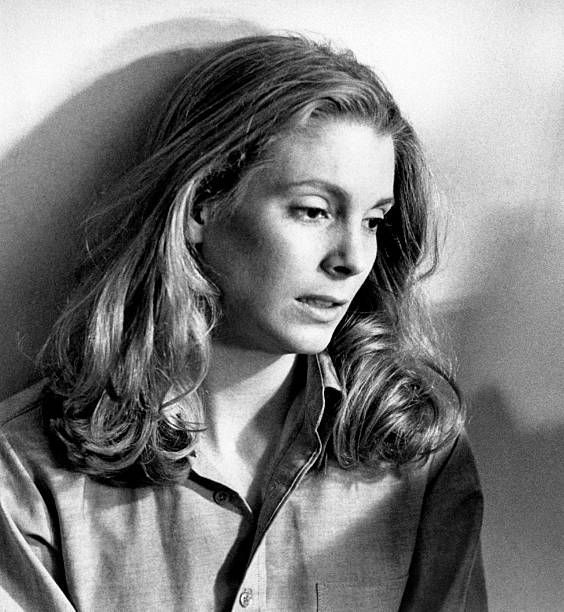
Esther Greenwood is from the psychological novel, The Bell Jar by Sylvia Plath. This was published in 1963. Esther, just like a lot of nineteen year old girls, she doesn’t know who she is yet. Unfortunately, this leads to Esther being trapped in an identity crisis. Anxiety and apprehension shrouds Esther’s mind like a thick fog, squeezing her emotions as if they were being choked to death.
Sylvia Plath creates an inspirational character, who is a fictional representation of herself at nineteen. It is commonly known as a roman a clef. Essentially, Syvia Plath has cleverly and creatively intertwined real-life events from her life within her crafted and fabricated world.
Within The Bell Jar, Esther embarks on an internship at the fictional Ladies’ Day Magazine in New York. Although she may not be interested in fashion, she is certainly interested and talented in writing. Nevertheless, Esther still feels like an outsider, like she doesn’t belong as she was the only student who didn’t have a passion for fashion.
On her journey of self-discovery, she encourages herself to make connections with the different people she met. It harnessed her appreciation for different lifestyles and backgrounds. As Esther slowly uncovers herself, she soon is faced with inner torment and turmoil with her own mind.
Will Esther Greenwood ever find her own identity, or will she fall down a dark path?
Read this magnificently moulded novel and find out!
4. DR JEKYLL AND MR HYDE
Dr Jekyll and Mr Hyde are shadow mirrors of each other from the Gothic novel, The Strange Case of Dr Jekyll, and Mr Hyde by Robert Louis Stevenson. It was published in 1886. Yet again, we have another unorthodox, crazed scientist whose science turns into a macabre mess. This novel exposes the many deep layers a person a can inhabit but isn’t revealed on a daily basis. The characters of Dr Jekyll and Mr Hyde unveils the potential for an individual to have a shadow self, a dark side which isn’t usually willingly set free.
The civilised and renowned Dr Jekyll is battling with the morality within himself. Just like we do every day, right? Subsequently, Dr Henry Jekyll, in his desperation decides to suppress these urges by concocting a serum. Regrettably, this serum does not work in the way he wanted it to. Instead, it backfires on him entirely. Henry’s shadow self, his dark subconscious thoughts are freed, and transformed into Mr Hyde. Now a civilised doctor, and an immoral criminal are one in the same. Terrible crimes consume Dr Jekyll’s society when Mr Hyde takes over, as he satiates ALL of his malevolent desires.
In a fight against morality and immorality, Dr Jekyll struggles to control his urges and his alter ego slowly moulds Jekyll into the pinnacle of evil and sin.
Does Robert Louis Stevenson expose the detrimental impact on leaning into your dark desires? Should you always contain your shadow self? Read and find out!

Overall, these are my favourite main characters. All of these main protagonists have a variety of characteristics which influences the way these novels progress, as well as their character arcs. Lewis Carroll, Mary Shelley, Sylvia Plath, and Robert Louis Stevenson who have created commendable and creative characters that have used three-dimensional elements to bring their characters to life.
So, who are your favourite main characters?
Feel free to share your comments about any of these books. Also, I am happy to hear your recommendations on any books you would like me to talk about. If you have any questions about the post, don’t hesitate to ask.
Finally, remember to keep reading, writing, and exploring new books.


Comments